
One Body. One System. Are We Looking at Health at the Wrong Resolution?
The heart does not optimise at the expense of the lungs.
The brain does not ask the kidneys to repeat the medical history.
And no organ considers its job done simply because the data looks good.
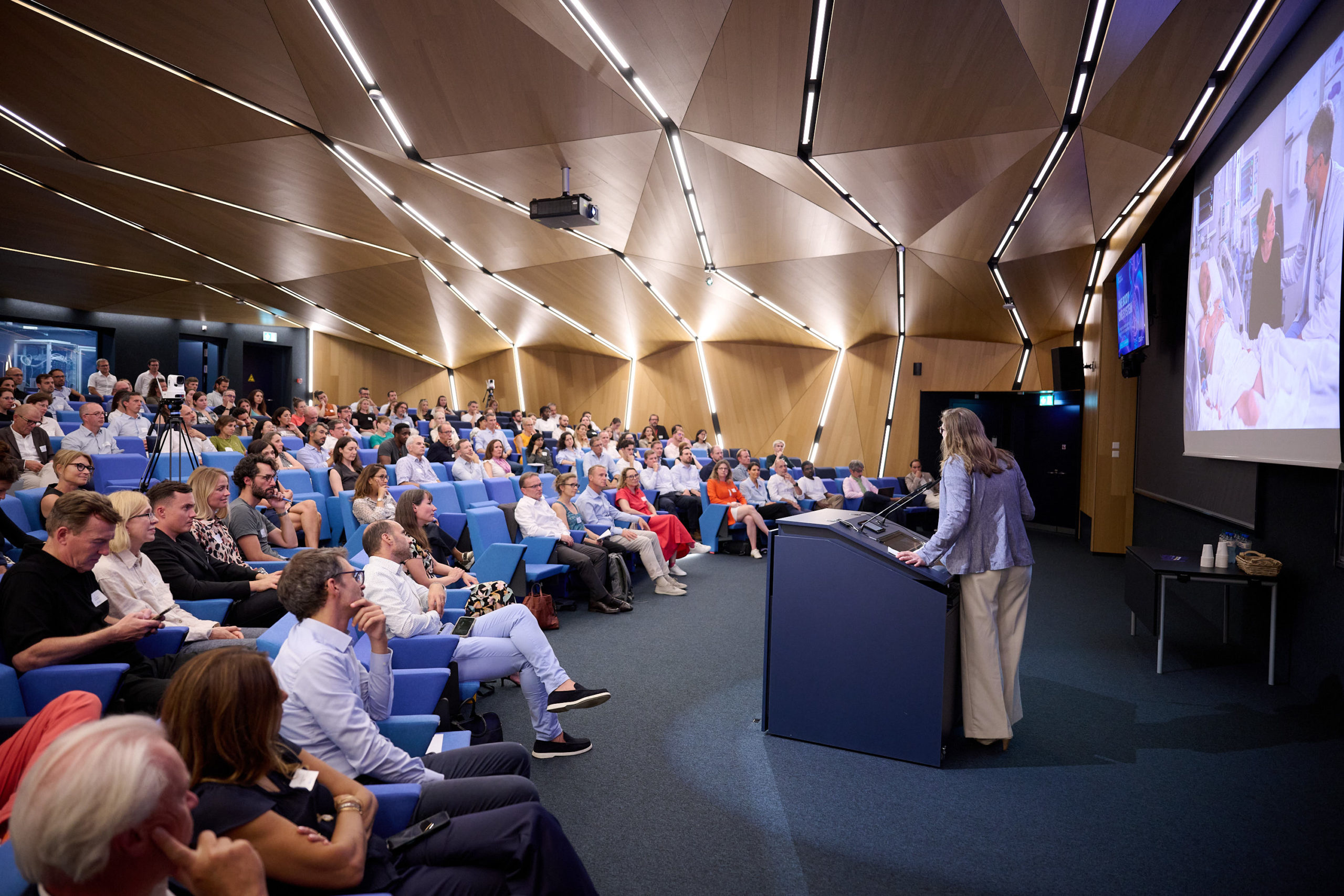
With these examples, Mirjam Bamberger, CEO of CSS, opened the fifth Future of Health Grant Conference in Lausanne with a simple observation:
“The body is an integrated system by design, but Swiss healthcare is not.”
A patient can receive excellent care from several specialists and still end up with a poor overall outcome because the pieces do not connect. For Bamberger, integrated healthcare therefore means not only bringing the right stakeholders together, but helping patients navigate a system that can otherwise become highly fragmented.
Throughout an afternoon dedicated to “One Body. One System. Reimagining health beyond symptoms and specialties,” one idea kept resurfacing in different forms.
Perhaps healthcare is not simply too fragmented. Perhaps, in many cases, we are looking at the patient at the wrong resolution.
We separate mental from physical health instead of seeing the whole person. We take snapshots of biological processes that change continuously. We identify a risk without connecting it to the care pathway it should trigger. We classify microorganisms at a level that can hide clinically relevant differences.
So what would change if we learned to look differently?
Looking at the patient at different resolutions
Saving the body is not the same as healing the person
Prof. Chantal Berna Renella, Chair of the Center for Integrative and Complementary Medicine at CHUV, began with a fictional patient assembled from real experiences in her pain clinic.
Ben survives a serious motorcycle accident thanks to intensive care, surgery and rehabilitation. Technically, his treatment is a success. His bones are repaired. His tests eventually come back normal.
Yet he does not feel well.
He experiences pain, dizziness and anxiety. He moves from neurologist to pulmonologist and pain physician. Each performs appropriate investigations, but the results do not translate into an explanation of what he is experiencing. The specialists do not necessarily talk to one another.
As Berna Renella put it: “We saved the body, but we broke the man.”
Her challenge to the audience went beyond a call for greater empathy. Modern medicine has become exceptionally good at highly technical interventions, but technical success and human recovery do not automatically coincide. Evidence shows that one in five adult critical-care survivors experiences PTSD symptoms, while fragmented care is associated with duplicated tests, emergency visits, readmissions and higher costs.
The underlying theory is hardly new. The biopsychosocial model was proposed almost 50 years ago. Yet, as Berna Renella put it, “the theory is clear, yet application lags.”
Part of the explanation may lie in incentives. She contrasted the reimbursement of highly technical care with relationship-centred care and argued that our systems can pay generously for investigations while valuing much less the time required to explain uncertainty and accompany suffering.
That raises an uncomfortable question: Can healthcare truly become holistic if its incentives continue to reward the fragments?

When “mental” health becomes a physical outcome
The same artificial boundaries appear in the categories we use to describe disease.
Take a guess:
How much can a mental disorder reduce life expectancy?
A: 3–5 years
B: 7–9 years
C: 12–15 years
D: 16–18 years
Reveal the answer
The correct answer is C: 12–15 years.
The meta-analysis referenced in the session reported 14.7 years of potential life lost.
That figure is striking not only because of its scale, but because it challenges the idea that mental and physical health can be considered separately.
HealthyMentis is approaching conditions such as ADHD and depression through neurometabolic profiling. Patients provide multiple dry-urine samples alongside symptom questionnaires, with the objective of giving clinicians biological information that can complement symptom-based assessment and support more individualised treatment decisions.
Rather than looking at a mental health diagnosis as a self-contained category, the approach asks whether a broader picture of the patient’s biology can help inform care.
The distinction between “mental” and “physical” may be useful for organising care. But the body itself does not necessarily respect it.
What if we are looking at biology too coarsely?
Resolution also matters at a much smaller scale.
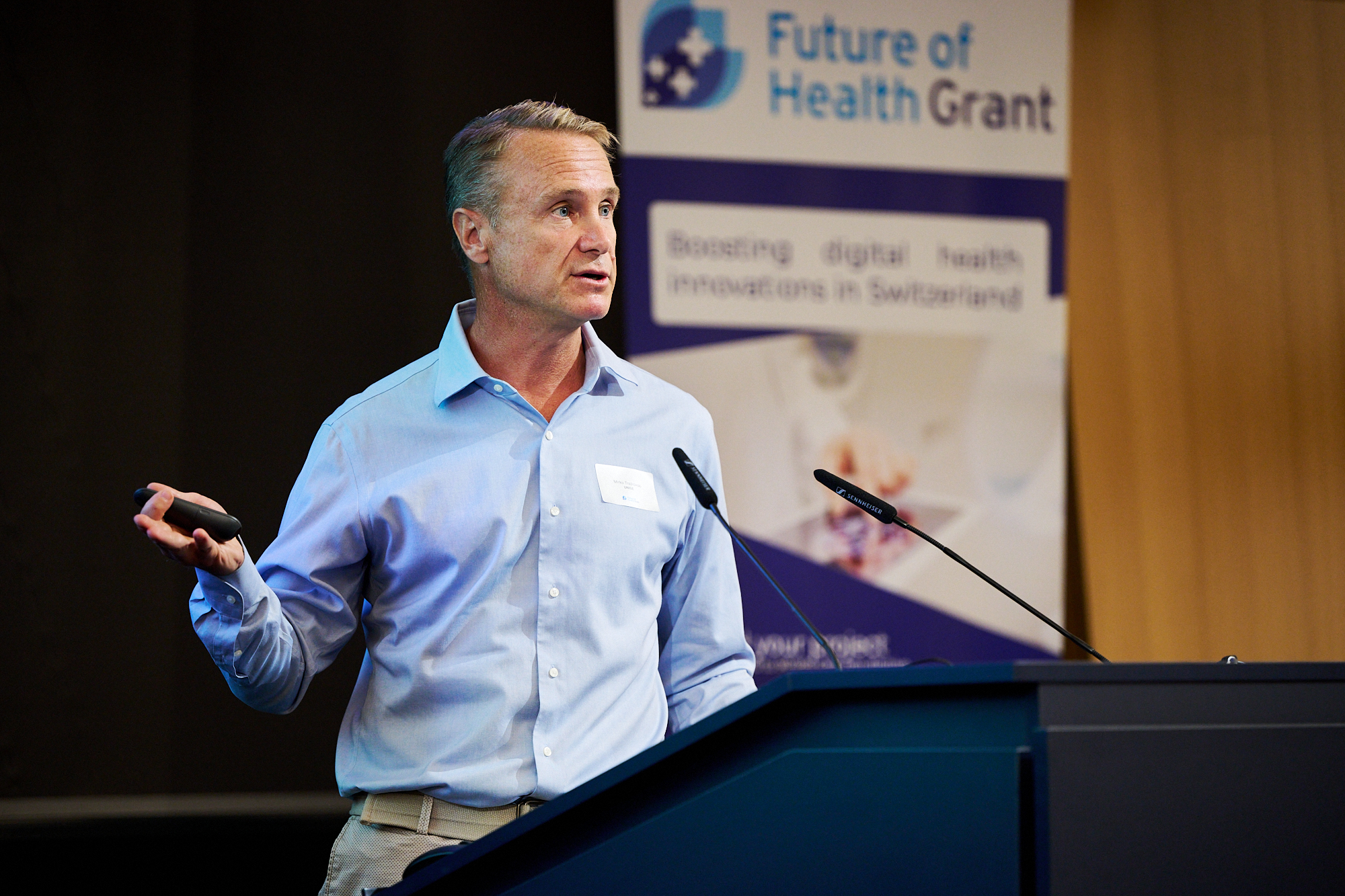
Prof. Mirko Trajkovski, Chair of the Department of Cell Physiology and Metabolism at the University of Geneva, explored this through the gut microbiome.
His team’s work investigates microbiota not simply at species level, but at the more granular level of subspecies. The premise is that grouping bacteria too broadly may hide functional differences relevant to disease and therefore limit their value as diagnostic markers.
The potential implication is striking.
His presentation moved from colorectal cancer screening to inflammatory bowel disease and the prediction of response to cancer immunotherapies. One question captured the idea neatly:
“A single microbiome profile, multiple clinical insights?”
Trajkovski described a future in which microbiome profiling could contribute to screening across multiple diseases and earlier diagnosis, rather than being confined to a single organ or specialty.
If that direction proves clinically useful, it challenges another assumption built into healthcare: that each disease necessarily requires its own isolated signal, test and pathway.
Sometimes, increasing biological resolution may reveal connections between conditions that medicine and clinical specialties often treat separately.
Prevention has two blind spots
Resolution also matters before a diagnosis is made.
We talk frequently about moving healthcare from treatment to prevention. But prevention itself has at least two different challenges.
First, we need to act on the risk we can already see.
Second, we need to detect the risk our current tools do not see.
Among people experiencing their first myocardial infarction, what proportion had at least one previously identified cardiovascular risk factor?
A: 98%
B: 90%
C: 80%
D: 60%
Reveal the answer
The correct answer is C: 80%.
But that figure hides a more interesting number: one in five had no previously identified risk factor.
Genknowme is investigating whether epigenetics can help close that blind spot. Epigenetics looks at chemical marks on DNA that influence how genes are switched on or off and can reflect the cumulative effects of factors such as lifestyle, environment and chronic stress.
This does not make established cardiovascular risk assessment obsolete. It poses a different question:
What are we not seeing yet?
A more preventive healthcare system may need to become better both at acting on known risk and at detecting vulnerabilities before conventional indicators cross a threshold.
A dynamic body, measured in snapshots
There is another form of resolution that matters: time.
Much of healthcare still relies on isolated measurements (a blood draw, a scan, an appointment) despite the fact that physiology is continuously changing.
What share of IVF cycles fail to result in a pregnancy?
A: 20%
B: 35%
C: 50%
D: > 50%
Reveal the answer
The correct answer is D: more than half.
For Monix, this mismatch between dynamic biology and intermittent measurement is central. Hormones can shift over short periods, yet fertility treatment still relies on intermittent testing. The startup is developing a microneedle-based wearable designed to monitor hormones continuously, a kind of “CGM for hormones.”
The larger idea goes well beyond IVF.
What do we miss when we try to understand a dynamic biological system from static snapshots?
Continuous glucose monitoring changed diabetes management in part because it revealed not simply a glucose value but a trajectory. Similar thinking may eventually apply to hormones and other biological signals.
Healthcare may increasingly move from asking “What is the value?” to “How is the system evolving over time?”
Sometimes the data is already there
If Monix illustrates the value of collecting data over time, Bonescreen illustrates almost the opposite.
Sometimes we do not need another measurement. We need to look at the data we already have through a different lens.
After a fragility fracture, what percentage of patients are still never diagnosed and treated for osteoporosis?
A: 20%
B: 50%
C: 80%
Reveal the answer
The correct answer is C: 80%.
Without treatment, the risk of a subsequent fracture after that first fracture doubles.
Bonescreen looks for signs of osteoporosis in CT scans that were originally performed for other clinical reasons. The same image can therefore reveal more than the condition it was initially acquired to investigate.
But detection alone is not enough. Bonescreen’s approach is to identify risk, quantify it, and connect the finding to the appropriate care pathway.
That final step matters. As co-founder Anjany Sekuboyina explained, one challenge in osteoporosis is that ownership of the disease can become unclear. Bonescreen is therefore working not only on identifying risk but also on connecting radiology with the departments and specialists who can act on it.
Together with Ensemble Hospitalier de la Côte and CSS, Bonescreen is now testing this approach in practice, starting with a retrospective analysis of 250 existing radiology examinations, before moving to a prospective analysis with new CT scans. Setting it up also required work on the less glamorous, but essential, questions such as technical infrastructure, data hosting and legal agreements.
The lesson is broader than osteoporosis:
Healthcare does not always lack data. Sometimes it lacks clarity on who should act next.
Or, in Mirjam Bamberger’s formulation: the future of healthcare should be less about who owns the patient and more about who owns the outcome.
More data or better connections?
There is an obvious danger in all of this.
More biomarkers. More continuous streams. More AI. More information extracted from existing images. More sophisticated diagnostics.
We could easily respond to fragmentation by producing even more fragments.
Berna Renella captured the choice particularly well:
“AI and digital tools can become the newest silo, or a connective tissue.”
That may be one of the most important design questions for digital health.
Does a new solution simply generate another score, dashboard or result? Or does it connect information to a clinician, a decision, a reimbursement pathway and ultimately an outcome?
This is also why testing innovation in real healthcare settings matters.
At the conference, the Future of Health Grant unveiled the Pilot Factory, designed to evaluate digital health solutions across three dimensions: economic viability, operational acceptance and scalability.
The process starts with the Pilot-in-a-Box, providing the legal and contractual framework needed to launch a pilot. The startup and clinical partners then define the relevant metrics and set up data collection protocols adapted to the care setting. The pilot is then deployed and measured, with the goal of providing hospitals, insurers, investors and startups with comparable evidence of impact.
Because today the difficult question is increasingly not: Can we build it?
But rather: Does it create enough value to be part of healthcare?
From more information to better outcomes
“One Body. One System.” began as a reflection on holistic healthcare.
But perhaps the deeper lesson is about resolution and connection.
We need enough resolution to see the person behind the technically successful treatment. To connect mental symptoms with physical biology. To identify risks that conventional models miss. To observe trajectories rather than snapshots. To extract overlooked information from data we already collect. And to recognise biological mechanisms that cut across the specialties we created to organise medicine.
At the same time, every increase in resolution makes integration more, not less, important.
A signal without a pathway does not improve care. A prediction without an intervention does not prevent disease. And a new digital tool that cannot integrate with the people, incentives and workflows around it risks becoming just one more silo.
The body already knows how to operate as one system.
The question is whether healthcare can learn to do the same.
Continue exploring
For those who couldn’t join us in Lausanne, or would like to revisit the discussions, you can watch the full conference recording.
The conference also revealed our Fall 2026 cohort, alongside new developments across the Future of Health Grant ecosystem. You can find the main announcements in our post-event press release.
But the conversation does not end with the conference.
Whether you are a startup looking to prove the real-world value of your solution, a healthcare provider interested in testing new models of care, an insurer exploring better ways to support prevention and adoption, or an investor looking for innovations that can genuinely scale, we would like to hear from you.